Katja Richter · 16 September 2026
How Simulation Software Is Transforming Valve Prototype Development Cycles
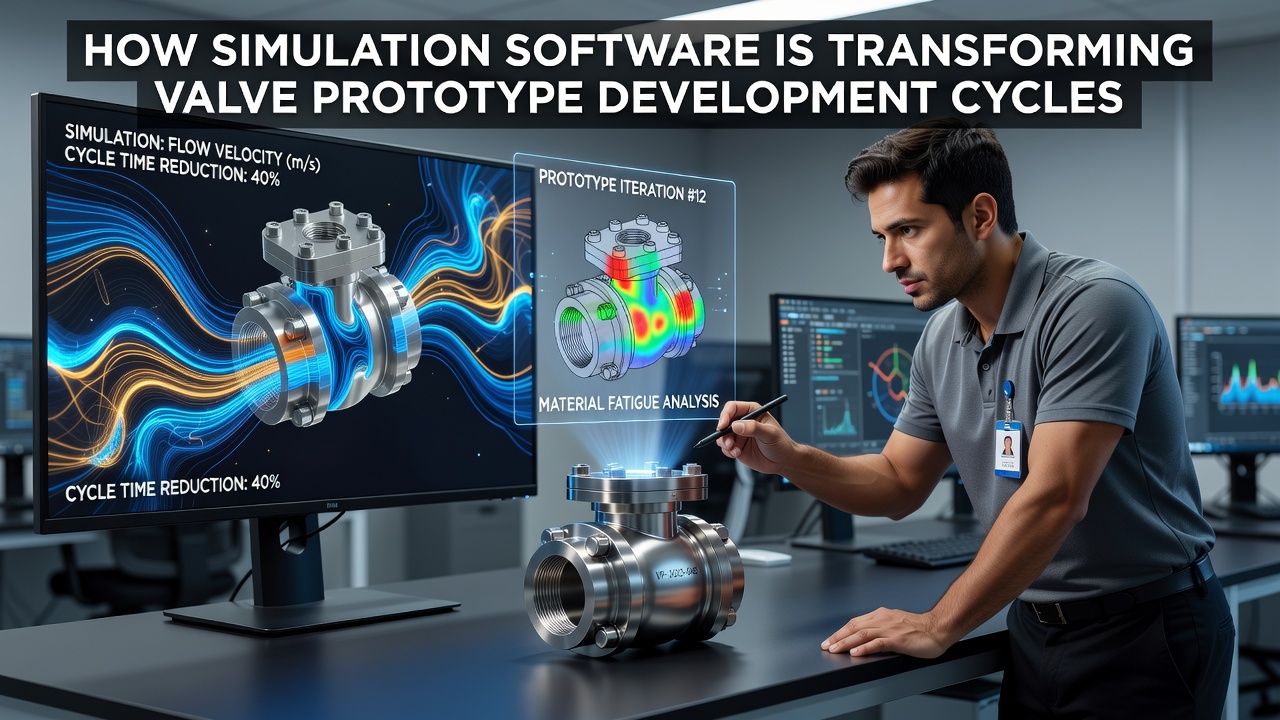
Engineers in the valve manufacturing sector have shifted toward simulation software as a core tool for prototype development because it replaces multiple rounds of physical testing with digital iterations that run in hours rather than weeks. Data from industry reports shows that companies using computational fluid dynamics and finite element analysis cut prototype cycles by 40 to 60 percent on average, while still meeting pressure rating and flow requirements set by international standards.
Traditional Development Versus Digital Workflows
Before widespread adoption of simulation tools, valve designers relied on physical prototypes that underwent pressure testing, leak checks, and endurance trials in laboratory facilities, and each failure required new machining and reassembly that added months to project timelines. Researchers at institutions across North America documented how these sequential steps created bottlenecks, especially when material changes or geometry adjustments surfaced late in the process. Simulation platforms now allow teams to evaluate stress distribution, cavitation risks, and thermal expansion in a single integrated model before any metal is cut.
Key Technologies Driving the Change
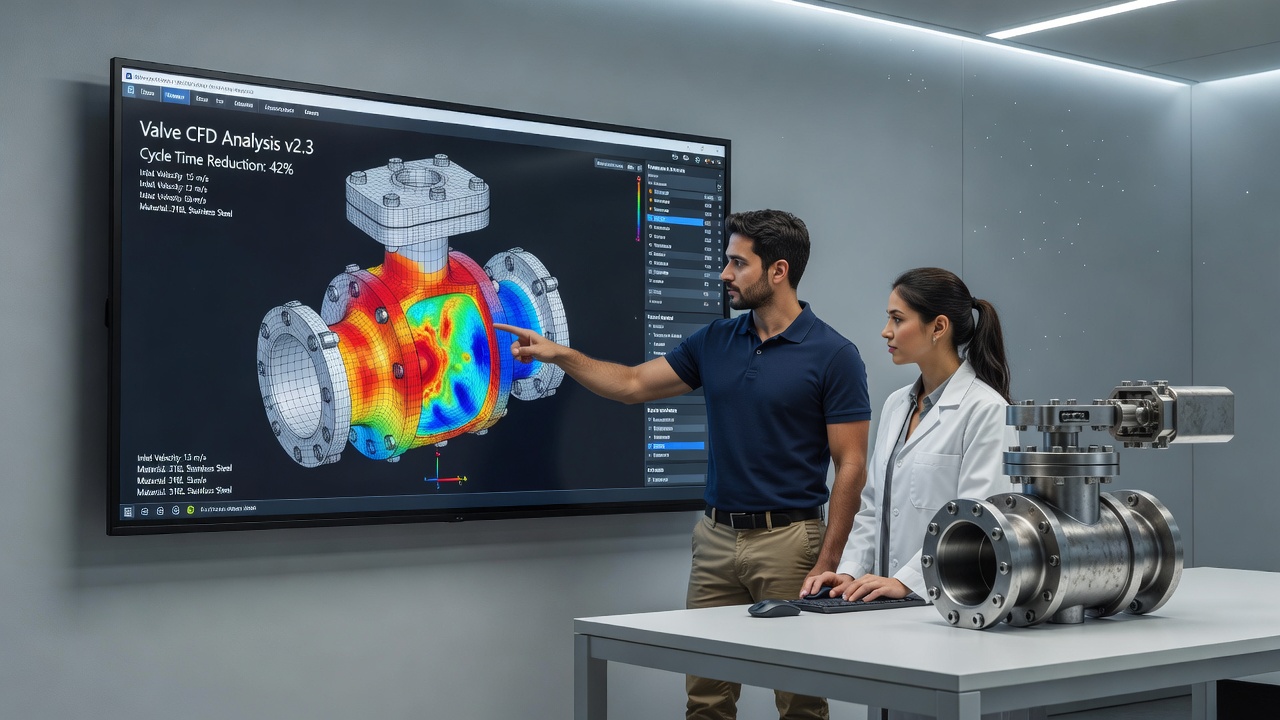
Modern valve development incorporates multiphysics solvers that combine fluid flow equations with structural mechanics and material fatigue models, and these solvers run on cloud clusters that scale to thousands of cores during peak analysis periods. Software vendors have added automated meshing routines and parametric optimization loops that test hundreds of design variants overnight, and the output includes visual heat maps plus numerical reports that highlight areas exceeding safety factors. According to figures released by the National Institute of Standards and Technology, firms integrating these tools report a measurable drop in scrap material because fewer physical samples reach the testing floor.
Impact on Cost and Time Metrics
Project logs from manufacturers in Europe and Australia indicate that average development time for a new pressure-relief valve dropped from 18 months to under nine months once simulation became the primary validation method, and the reduction stems directly from the ability to identify and correct flow separation issues before tooling commitments. Cost tracking data shows corresponding savings in prototype fabrication, because only the final candidate designs move to physical production, while earlier concepts stay entirely digital. Observers note that regulatory submissions also accelerate when simulation reports accompany test results, since agencies accept verified models as supporting evidence under updated certification guidelines.
Industry Examples and Adoption Patterns
One automotive supplier in Canada documented a complete redesign of a coolant control valve using only simulation iterations for the first four versions, and the fifth physical unit passed all endurance tests on the first attempt. Similar patterns appear in oil-and-gas equipment makers who adopted the same workflow for subsea gate valves, where high-pressure environments make repeated physical testing expensive and logistically complex. Research institutions in the European Union have published case studies confirming that simulation-driven cycles maintain or exceed the reliability of legacy methods when boundary conditions are properly calibrated against existing field data.
Integration With Emerging Manufacturing Processes
Additive manufacturing now pairs directly with simulation outputs because designers can export optimized geometries straight to 3D printers for rapid low-volume samples, and this combination further compresses the feedback loop between digital prediction and physical verification. In September 2026 several manufacturers plan to showcase valves produced through this hybrid route at major trade events, highlighting how simulation models informed both the printed prototype and the final cast version. Software updates scheduled for the same period include tighter links to digital twin platforms that track in-service performance and feed real-world data back into the next design round.
Challenges in Implementation
Teams still face hurdles when converting legacy drawings into accurate simulation inputs, and discrepancies between modeled and measured results sometimes require recalibration of material properties or boundary conditions. Training programs at technical colleges in Australia and the United States now emphasize these validation steps so new engineers understand both the capabilities and the limits of the software. Despite these adjustments, teh overall trajectory shows continued expansion of simulation use across valve categories, from simple check valves to complex control assemblies.
Conclusion
Simulation software has become a standard part of valve prototype development because it delivers faster design iterations, lower material waste, and earlier detection of performance issues. Manufacturers who integrate these tools with physical testing achieve shorter cycles without sacrificing compliance or reliability, and ongoing advances in computing power plus data integration point to further compression of development timelines in the years ahead.